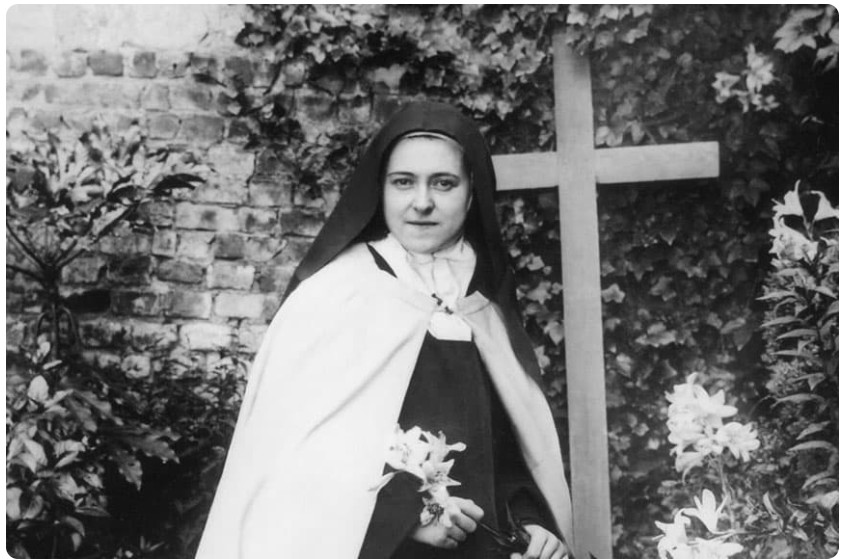

Saint Thérèse of Lisieux
St. Joseph Parish will host five first-class relics of Saint Thérèse of Lisieux and two first-class relics of her parents, Sts. Louis and Marie Zélie Guérin Martin, on Tuesday, May 12, 2026, from 2:00 PM to 7:00 PM in the main church.
Who was Saint Thérèse of Lisieux?
Thérèse of Lisieux was a Carmelite nun called the “Little Flower” who lived a cloistered life of obscurity in the convent of Lisieux, France. Her autobiography, The Story of a Soul, is read and loved throughout the world. Thérèse Martin entered the convent at the age of 15 and died in 1897 at the age of 24.
Thérèse saw in quiet suffering a redemptive suffering. She said she came to the Carmel convent “to save souls and pray for priests.” Shortly before she died, she wrote: “I want to spend my heaven doing good on earth.”
Thérèse of Lisieux was canonized in 1925. On October 19, 1997, Pope John Paul II proclaimed her a Doctor of the Church, the third woman to be so recognized in light of her holiness and the influence of her teaching on spirituality in the Church.
Her parents, Louis and Zélie, were beatified in 2008 and canonized in 2015.
That is a relic?
A relic of a saint is a physical object—bodily remains, personal possessions, or items touched by them—venerated as a tangible memorial of a holy person.
How can a relic benefit us?
The primary benefit of a saint’s relic is to act as a tangible, physical link to a holy person, fostering spiritual devotion, prompting prayerful intercession, and encouraging imitation of their virtues. Relics are used to deepen faith, offering comfort to the faithful and acting as instruments for healing, connecting believers to the Communion of Saints and ultimately to God.
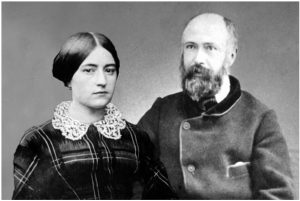
Saints Louis Martin and Zélie Guérin
Examples of the Benefits and Purpose of Relics
Encouragement of Virtue: They serve as tangible reminders of the saint’s life, inspiring believers to emulate their faith and virtuous actions.
Spiritual Intercession: Relics are used to focus prayers, asking the saint to intercede on behalf of the faithful.
Healing and Miracles: God may use relics as an instrument for healing, with many accounts of miracles, including physical healing, associated with them.
Communion of Saints: They represent the continued spiritual connection between the living on earth and those in heaven.
Devotion and Respect: Veneration of relics (dulia) honors the saint whom God worked through, recognizing their body was a temple of the Holy Spirit.